
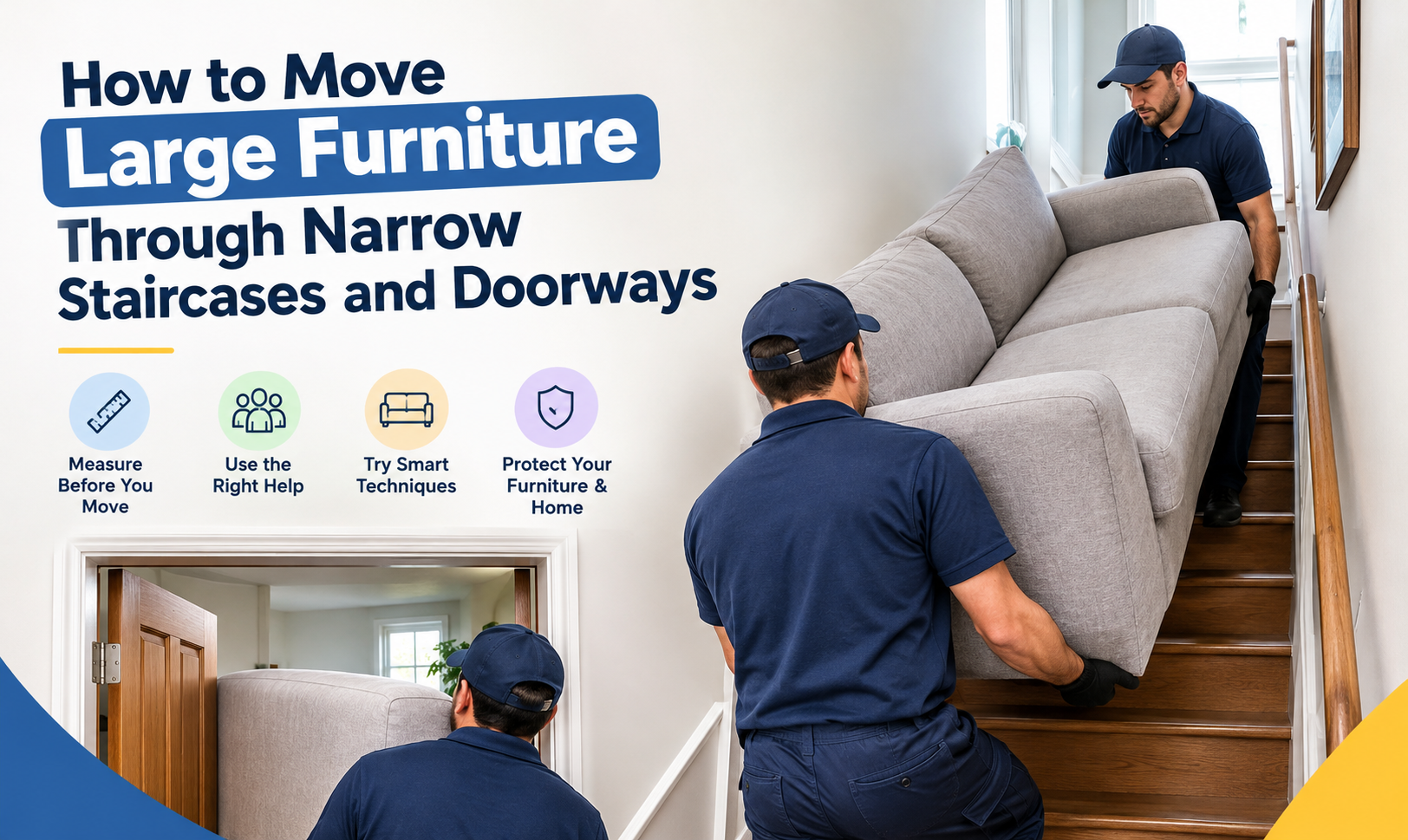
Moving large furniture can be one of the most challenging parts of relocating to a new home. Sofas, wardrobes, beds, dining tables and other bulky items may not fit easily through narrow doorways, tight hallways or staircases. Without proper planning, these obstacles can cause scratched walls, damaged furniture and unnecessary delays.
For homeowners and tenants planning a move in London, Croydon or Surrey, understanding how to prepare oversized furniture can make the moving process safer and more organised.
Alpha Removals helps customers plan their moves around property access, furniture dimensions and other practical requirements. If you are planning a relocation, explore the company’s house removal services to discuss your moving needs.
Why Is Moving Large Furniture Through Narrow Spaces Difficult?
Moving bulky furniture requires more than lifting and carrying. The size and shape of each item, the layout of the property and the available turning space all affect how easily furniture can be moved.
Common challenges include:
- Narrow doorways: Large sofas, wardrobes and bed frames may be wider than the available entrance.
- Tight staircases: Sharp turns and limited headroom can make it difficult to move furniture between floors.
- Restricted hallways: Corners, door frames and other obstacles can limit movement.
- Heavy furniture: Solid wooden furniture and large tables may require additional assistance and suitable handling techniques.
- Limited access in flats: Properties without lifts can make transporting bulky belongings between floors more complicated.
Identifying these challenges before moving day helps you prepare the right approach and reduces the risk of damage.
1. Measure Furniture and Access Points Before Moving Day
One of the most effective ways to prepare for moving large furniture is to measure everything in advance.
Measure the height, width and depth of each large item. Then measure the doorways, hallway widths, staircase turns and ceiling clearance along the planned route.
Measuring only the entrance door may not be enough. Furniture also needs sufficient space to turn and move through the entire property.
Create a list of items that may require special attention, including:
- Large corner sofas and sectional sofas
- Tall wardrobes and cupboards
- King-size bed frames and mattresses
- Dining tables and large desks
- Heavy cabinets and bookcases
If an item appears too large for the available space, consider whether it can be safely dismantled or moved using an alternative route.
2. Check the Staircase Layout and Turning Space
Staircases can be particularly challenging when moving large furniture. A staircase might have enough width for an item to pass straight through but not enough room to turn at a landing.
Before moving furniture upstairs or downstairs, inspect the full route. Look for sharp corners, low ceilings, handrails, narrow landings and doors that restrict movement.
For properties in London and Croydon, older buildings, converted houses and upper-floor flats may have unusual layouts that need extra attention.
If you are unsure whether a large item will fit, seek professional advice before attempting to move it. Forcing furniture through a restricted space can damage both the item and the property.
3. Dismantle Furniture Where Possible
Some furniture becomes easier to move when it is separated into smaller components.
Depending on the design, you may be able to remove:
- Table legs and detachable extensions
- Bed frames and headboards
- Wardrobe doors and removable shelves
- Sofa legs and detachable sections
- Desk components and drawer units
Keep screws, bolts and fittings in labelled bags. Attach clear labels to the corresponding furniture parts and photograph complicated assemblies before dismantling them.
Not every item should be dismantled. Built-in furniture, fragile fittings and complicated mechanisms may require specialist attention. Follow the manufacturer’s instructions and avoid taking apart items that cannot be safely reassembled.
Alpha Removals provides furniture dismantling and reassembly services to help prepare suitable furniture for transport. Discuss your specific requirements with the team before moving day.
4. Protect Furniture, Walls and Door Frames
Even when furniture fits through a narrow opening, its edges can scrape walls or damage door frames.
Before moving bulky items, remove obstacles from the route and protect vulnerable surfaces. Use suitable furniture blankets, padding and protective materials to reduce the risk of scratches and impact damage.
Pay particular attention to:
- Wooden furniture corners and edges
- Glass panels and mirrored doors
- Painted walls and door frames
- Staircase handrails
- Polished floors and tiled surfaces
Wrap fragile components separately and secure protective coverings so they do not slip during handling.
For customers who need additional preparation, Alpha Removals offers packing services to help protect belongings during relocation. You can also explore its packing and unpacking services when planning the wider move.
Remember that protective materials alone cannot make an oversized or excessively heavy item safe to carry. Proper handling and adequate assistance remain essential.
5. Use the Right Lifting and Handling Techniques
Heavy furniture should be handled carefully to reduce the risk of injury and damage.
Before lifting, agree on the route and make sure everyone involved understands where the item needs to go. Keep the path clear, communicate during movement and avoid sudden changes in direction.
Depending on the item and the surface, professional movers may use equipment such as furniture dollies, moving straps and suitable lifting aids.
Avoid twisting your body while carrying heavy furniture, and never attempt a lift that exceeds your physical ability. Large items can shift unexpectedly, particularly on stairs or around corners.
If a piece of furniture is unusually heavy, unstable or difficult to grip, professional furniture removal assistance is generally safer than attempting to move it alone.
6. Consider Alternative Routes Into the Property
Sometimes the main entrance is not the easiest way to move large furniture.
Depending on the property, possible alternatives may include a wider rear entrance, a different staircase or another accessible route. However, every alternative must be checked for safety and permission before use.
If you are moving into a flat or apartment building, check whether management rules restrict furniture movement through communal areas or require advance arrangements.
Do not attempt to lift furniture over balconies, through windows or along external walls without a suitable, professionally managed lifting plan. Such moves can be dangerous and may require specialist equipment and permissions.
When access is uncertain, share photographs, measurements and details of the property with your removal company before booking.
7. Plan Ahead for House Removals in London, Croydon and Surrey
Property access can vary considerably across London and surrounding areas. Narrow streets, limited parking, shared entrances and upper-floor flats may affect how furniture reaches the removal vehicle.
When arranging house removals in London, provide your removal company with accurate details about both properties.
Useful information includes:
- Floor level and lift availability
- Staircase width and landing space
- Parking and loading arrangements
- Approximate dimensions of oversized furniture
- Items that require dismantling
- Any restrictions on building access
Planning these details early helps the removal team understand the job, prepare appropriate equipment and provide a more accurate quotation.
For customers moving within Croydon, across London or into Surrey, discussing access requirements before moving day can help reduce avoidable delays.
8. What If Your Furniture Cannot Fit Through the Available Space?
If furniture cannot pass through a doorway or staircase, do not force it through the opening.
First, recheck the measurements and determine whether removable parts can be detached safely. Consider whether another entrance offers sufficient clearance.
If the item still cannot be moved safely, ask a professional removal company to assess the situation. Some properties or furniture items may require specialist handling arrangements.
If your move involves a temporary gap between properties, you can also discuss suitable storage options with Alpha Removals.
The appropriate solution depends on the furniture dimensions, building layout, access restrictions and the available handling equipment.
When Should You Hire Professional Furniture Removal Services?
Professional assistance may be particularly useful when moving heavy wardrobes, large sofas, oversized tables, fragile furniture or items that must pass through several narrow turns.
A professional removal team can assess access, plan the handling process, use appropriate protective equipment and determine whether furniture dismantling is necessary.
Alpha Removals provides house removal services across London and surrounding areas, with support for furniture handling, dismantling and reassembly, packing and storage where required.
If you are planning a move and have furniture that may be difficult to remove, share the details with the team before booking. This helps establish what the job involves and what arrangements may be needed.
Visit the Alpha Removals website to learn more about its house removal services and discuss your relocation requirements.
Plan Your Furniture Move With Alpha Removals
Moving large furniture through narrow staircases and doorways requires more than strength. Accurate measurements, suitable preparation, careful handling and a clear plan can help protect your belongings and property throughout the move.
If you are preparing for a house move in Croydon, London or Surrey, contact Alpha Removals to discuss your furniture, property access and moving requirements. Request a quotation based on the details of your move and plan ahead for a smoother relocation.
Frequently Asked Questions
Measure the sofa and doorway first, then check the surrounding hallway and turning space. If the sofa has removable legs or detachable sections, removing them may help. Avoid forcing the sofa through the opening, as this can damage the upholstery, frame or walls.
Dismantling can make certain items easier to carry and transport. Bed frames, table legs and some wardrobes may be suitable for dismantling. Always check the manufacturer’s instructions and keep all fittings labelled for reassembly. You can discuss furniture dismantling and reassembly with Alpha Removals.
Clear the route, protect furniture edges and vulnerable surfaces, and ensure the people handling the item can move it without rushing. Professional packing services can help prepare suitable items for transport.
Some removal companies provide dismantling and reassembly as part of their services. Contact Alpha Removals to confirm the arrangements available for your particular move and the items that need to be dismantled.
Professional movers can assess the staircase, access restrictions and furniture dimensions to determine a suitable handling plan. The difficulty may depend on the number of floors, item weight, available space and building access.